
Best Cupping In Columbus Circle (Upper West Side)
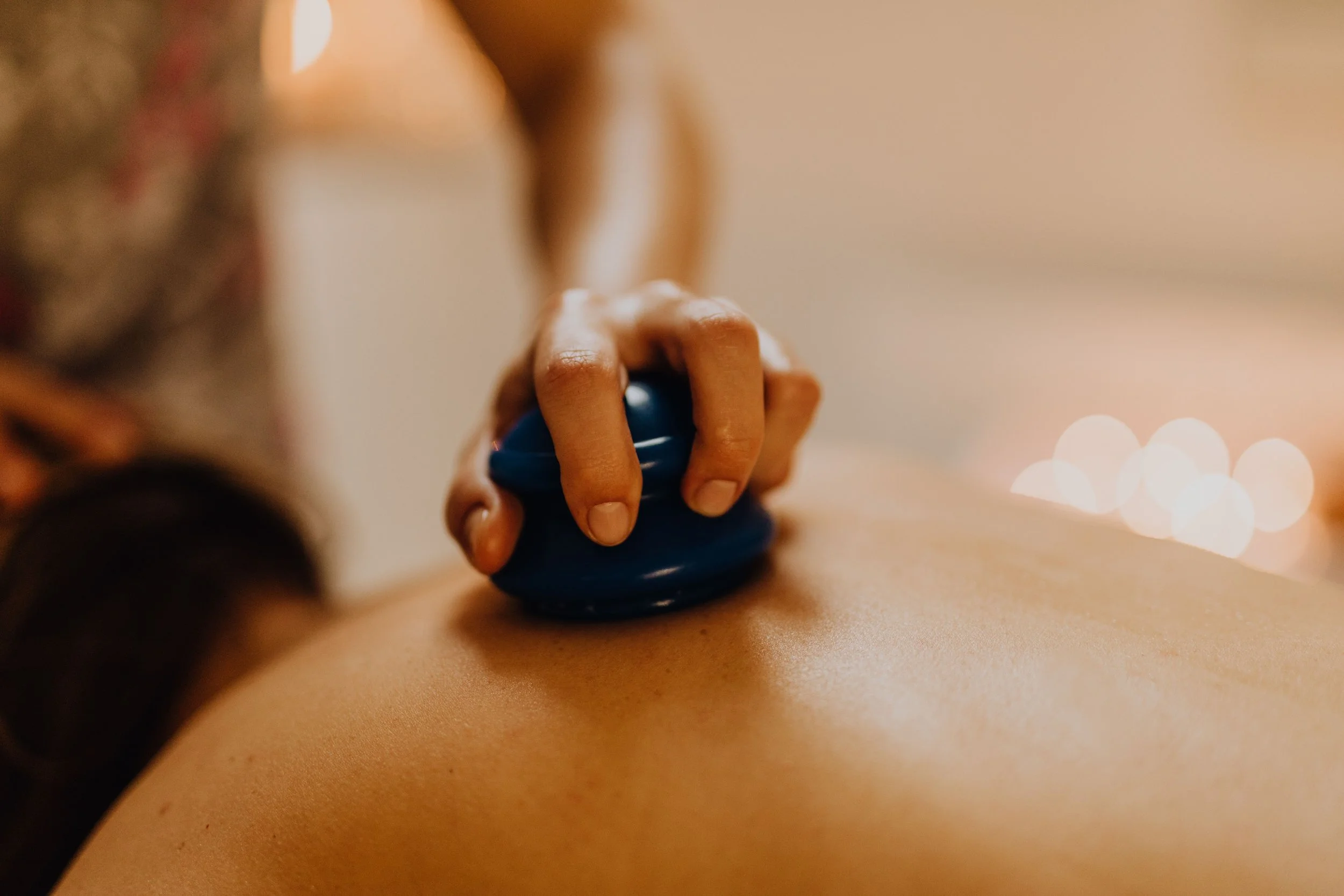
Your shoulders are not tense because you forgot to breathe deeply. They are tense because you spent six hours toggling between Slack, a spreadsheet, and a phone held at a questionable angle, then carried groceries home through Midtown. People searching for cupping near Columbus Circle usually want something that feels more targeted than a generic rubdown, and a little different from standard pressure.
Cupping can be exactly that. It can also be overhyped and misunderstood. Here is the practical version.
What cupping is
Most massage presses tissue down. Cupping does the opposite: silicone or plastic cups create suction that lifts the skin and the tissue beneath it. At PRESS, the cups usually glide across the skin, a technique called dynamic cupping, woven into your massage where your massage therapist thinks the lifting action will help most, usually the back and shoulders.
The sensation is distinct: a broad pull or lift instead of steady downward pressure. Some people love it immediately, especially on areas where direct pressure feels too sharp.
The technique has roots in traditional Chinese and Middle Eastern medicine. What happens in a modern studio is a practical adaptation: no fire, no glass, integrated into regular bodywork by a licensed massage therapist. (Our full cupping explainer is here.)
Why people add it
Cupping tends to appeal to people who carry the familiar New York upper-body load: tightness across the chest and front shoulders, a stubborn band across the upper back, or legs that feel dense after marathon training, strength work, or too many Citi Bike rides.
People who like it describe muscles feeling looser, stubborn areas feeling easier, and a lifting sensation that is deeply relaxing for some nervous systems. The research is modest, and cupping does not extract toxins, a claim that has outlived its usefulness. It is best understood as one tool within a thoughtful massage, not a treatment on its own.
About the marks
The circular marks can range from faint pink to deep purple-red and usually fade within a few days to two weeks. They come from suction drawing blood toward the skin's surface. They are not proof the session was especially effective, and darker marks do not mean you needed it more.
This matters near Columbus Circle, a short walk from Lincoln Center, Central Park, offices, and hotel lobbies. Marks may be perfectly fine for a Saturday recovery session and inconvenient before a Monday board meeting or a sleeveless event. Ask your massage therapist how visible they are likely to be, and schedule accordingly.
Who should skip it
Tell your massage therapist about blood-thinning medication, bleeding disorders, fragile or irritated skin, sunburn, recent injury, or varicose veins in the area. If you are pregnant, your session should follow prenatal protocols. And it is completely reasonable to skip cupping if you dislike the sensation or do not want marks. There is no prize for enduring a technique that makes you brace.
Getting the most from your session
Arrive with a specific complaint: "My upper back feels locked after travel" gives your massage therapist more to work with than "I carry stress." Mention anything coming up where marks would matter. During the session, describe the sensation plainly; productive suction can feel intense, but never sharp or alarming.
Afterward, pay attention to the practical measures. Is turning your head easier? Do your shoulders sit lower? Did you sleep well? That is the standard worth using, not the color of the circles.
Frequently Asked Questions About Cupping
Is cupping painful?
It should not be. You may feel tightness or a strong pulling sensation. If it feels sharp, say so and your massage therapist will reduce the suction.
How is cupping offered at PRESS?
As an add-on to your massage, woven into a full body or back, neck and shoulders session rather than as a standalone treatment.
How long do the marks last?
Usually a few days to two weeks, depending on your skin and the suction used.
Who should avoid cupping?
People with bleeding disorders, on blood thinners, or with irritated or broken skin in the area. Check with your doctor if you are unsure.
Can I shower after cupping?
Yes, though some people prefer to avoid very hot water for a few hours while the skin feels sensitive.
Does cupping release toxins?
No. Your liver and kidneys handle waste processing; cupping works on how your muscles feel and move. (More on the toxin myth.)
Is cupping only for athletes?
Not at all. Desk workers, parents, and anyone with a stubborn tight area can benefit.
At PRESS
Cupping is available as an add-on at our Columbus Circle, Manhattan studio, minutes from Central Park and Lincoln Center, and at every PRESS studio: Williamsburg, Brooklyn; Greenpoint, Brooklyn; Union Square, Manhattan; and Long Island City, Queens. Book here and ask to add cupping.
Read also:
Written by Rachel Beider, LMT, founder of PRESS Modern Massage. Rachel is a New York State–licensed massage therapist and AMTA member with nearly two decades of experience in massage therapy and wellness.